
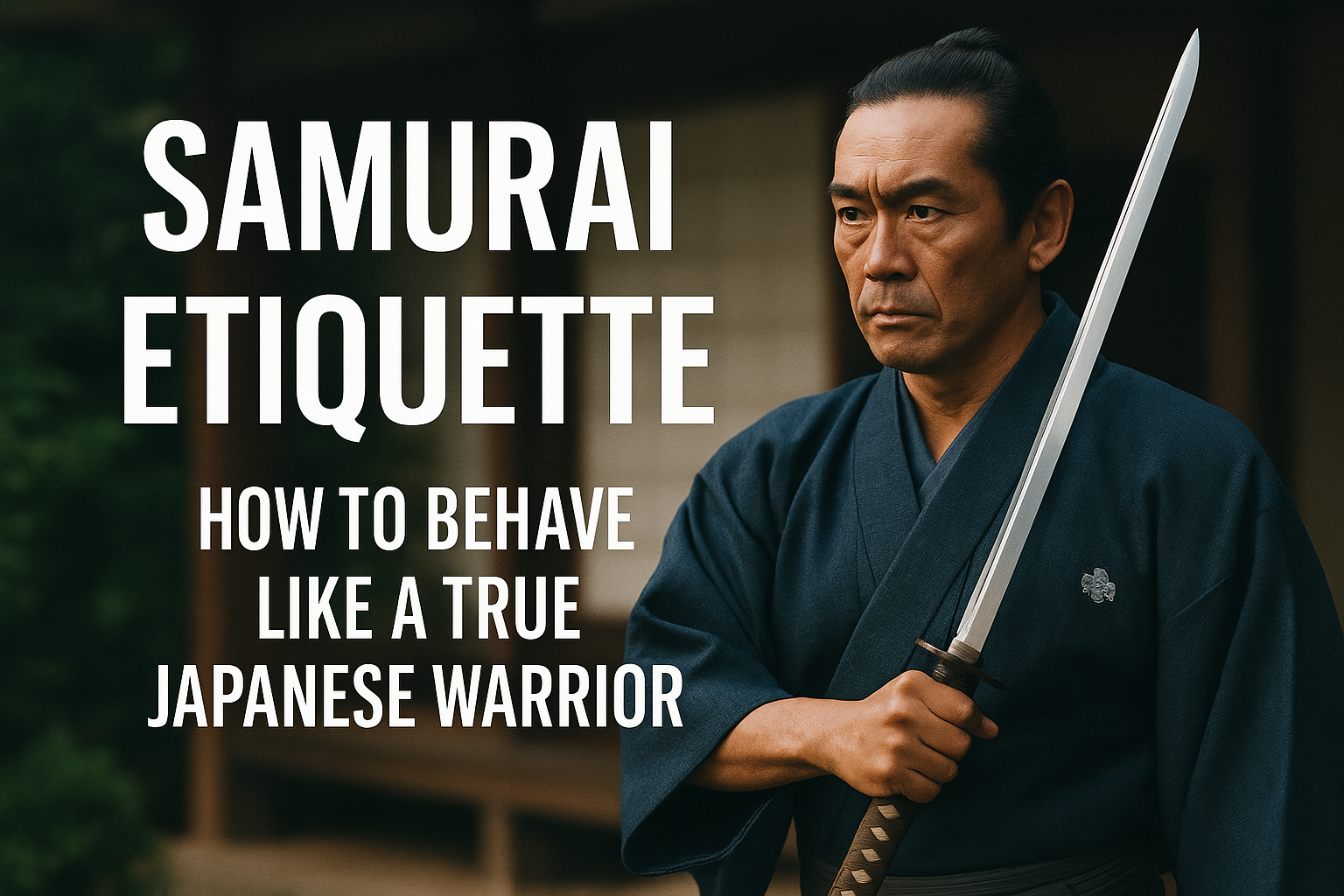
When people picture the samurai, they often see fierce sword fights, gleaming armor, and legendary battles. But being a samurai was about far more than skill with a blade — it was also about discipline, honor, and proper etiquette. In fact, samurai etiquette was central to their identity, shaping how they interacted with allies, superiors, and even rivals. Today, learning these customs is a meaningful way to connect with Japan’s cultural heritage and to carry its values into modern life.
This guide explores the core principles of samurai manners — from the way to bow to the respectful handling of a sword — and shows practical ways to experience these traditions today.
1. The Core Principles of Samurai Etiquette
1.1 Rei (礼) – The Art of Respect
At the heart of samurai behavior is rei, or respect. Whether greeting a lord, meeting an opponent, or interacting with a fellow warrior, samurai used precise bows and composed body language to demonstrate humility and restraint. A straight back and measured bow conveyed sincerity; gaze was moderated to avoid unnecessary aggression.
1.2 Bushidō – The Way of the Warrior
The Bushidō code emphasized loyalty, integrity, courage, and self-discipline. Samurai valued honesty in speech, moderation in behavior, and fairness in combat. Damaging one’s reputation could be considered worse than physical defeat, which is why etiquette and ethics were inseparable.
1.3 Meiyo (名誉) – Honor Above All
Honor guided everyday choices: keeping one’s word, protecting the vulnerable, and avoiding shameful acts. Even small gestures — such as how a sword was offered or where it was placed — reflected a person’s character.
2. Etiquette in Daily Life
2.1 Greetings and Bowing
Samurai bows were exacting. Hands rested at the sides or lightly on the thighs, the back stayed straight, and the eyes lowered. The depth of the bow communicated degrees of respect. Modern Japanese etiquette still echoes these practices.
2.2 Conversation and Speech
Samurai spoke in a measured, respectful tone. Interruptions were rare, boasting was frowned upon, and honorific language was used for superiors. Even when opinions differed, civility remained non-negotiable.
2.3 Dress and Presentation
Appearance signaled respect for the occasion. From simple cotton attire for training to full armor for battle, clothing matched context. Swords were polished; armor was kept free of dirt and dents. Neatness itself was a form of courtesy.
3. Sword Etiquette – Handling the Katana with Respect
3.1 Never Touch Another Person’s Sword Without Permission
A samurai’s sword was considered their soul. Touching it without consent was a grave insult — a violation of both personal space and honor.
3.2 Drawing and Sheathing the Sword
The katana was drawn in a smooth, controlled motion, traditionally with the blade facing upward. When sheathing, the back of the blade (mune) was guided along the scabbard to signal calm intentions and to preserve the edge.
3.3 Passing a Sword
When handing a sword to someone, samurai offered it with the handle first and the cutting edge turned toward themselves — a gesture of trust and respect.
4. Samurai Etiquette in Combat
4.1 Saluting Before and After a Bout
Before a duel or practice match, opponents bowed to each other — sometimes also to the ground — acknowledging mutual respect. After the bout, they bowed again regardless of the result.
4.2 Controlled Strikes
Even in training, wild swings were discouraged. Every movement was deliberate, expressing mastery and composure rather than brute force.
4.3 Accepting Defeat with Grace
To lose honorably was not shameful. Dignity in defeat and the resolve to learn from mistakes were hallmarks of a true warrior.
5. How to Experience Samurai Etiquette in the Modern Day
5.1 Learn in a Dojo
Across Japan, many martial arts schools still preserve samurai etiquette. Sword practice often comes with instruction in bowing, posture, and respectful interaction — valued just as highly as technique.
5.2 Visit Samurai-Related Historical Sites
In Tokyo and beyond, museums and shrines connected to famous warriors offer exhibitions and ceremonies that illuminate samurai customs and values. For example, the Japanese Sword Museum offers world-class displays of katana craftsmanship.
5.3 Step Beyond Observation and Try It Yourself
Beyond visiting and watching, you can find opportunities to practice sword handling and etiquette firsthand. Experiencing these movements yourself deepens your understanding of samurai culture — a concept explored further in our Samurai Experience Plans in Tokyo guide.
6. Final Thoughts
Samurai etiquette is more than old-fashioned manners — it is a living philosophy of respect, discipline, and honor. Whether you’re a martial arts enthusiast, a history lover, or simply curious about Japan, learning these customs is a rewarding way to connect with the samurai spirit.
Ready to experience the etiquette and sword skills of a Japanese warrior? Discover it in the heart of Tokyo.