
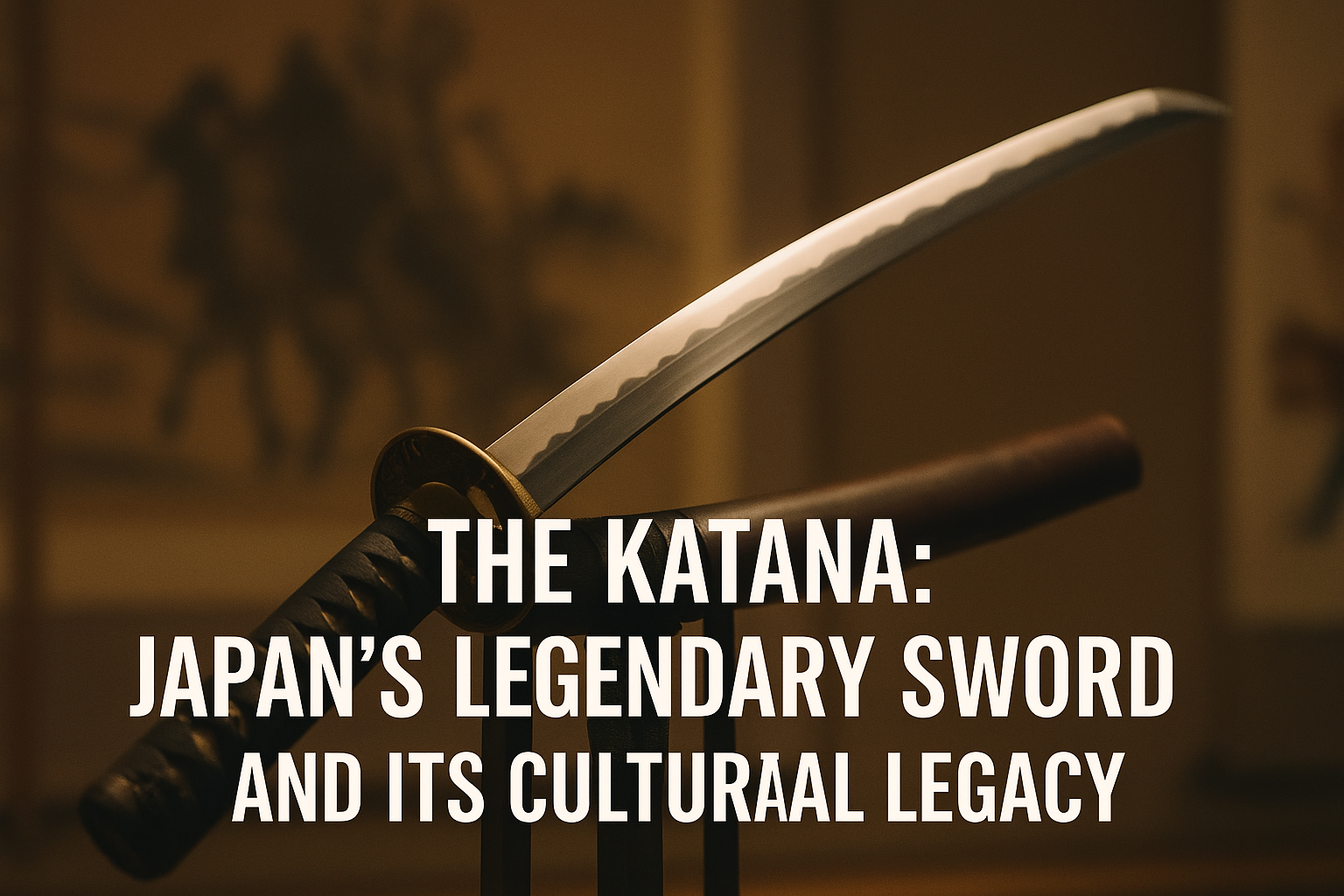
Few symbols of Japan are as instantly recognizable as the katana. This elegantly curved, razor-sharp blade has captivated the world for centuries, representing not only the martial prowess of the samurai but also the artistry, discipline, and values of Japanese culture. From ancient battlefields to modern museums, the katana continues to inspire fascination around the globe.
In this guide, we explore the history of the katana, its craftsmanship, symbolic meaning, and where you can experience it firsthand today.
1. The Origins of the Katana
The katana emerged during Japan’s Kamakura period (1185–1333), a time of intense warfare. Earlier straight swords were replaced by curved blades better suited for quick draws and mounted combat. Its distinctive curvature allowed samurai to strike swiftly without losing momentum.
By the Muromachi period (1336–1573), the katana had become the preferred sidearm of the samurai class, often paired with the shorter wakizashi in a combination called daishō — a mark of status and honor.
2. Craftsmanship: How a Katana Is Made
The making of a katana is a sacred art, blending metallurgy and ritual. Master swordsmiths fold and hammer steel multiple times to remove impurities, creating a blade that is both strong and flexible. The edge is hardened through a unique process called yaki‑ire, in which clay is applied to the blade before quenching it in water.
The result is a distinct hamon — a wavy temper line — that is as much an artistic signature as it is a testament to the blade’s quality.
To understand the etiquette that accompanies sword handling, see our guide on Samurai Etiquette.
3. The Symbolism of the Katana
To the samurai, the katana was more than a weapon — it was the “soul of the warrior.” It embodied the values of Bushidō, including honor, loyalty, and self‑discipline. Carrying a katana was both a privilege and a responsibility; misuse could bring disgrace.
Even today, the katana symbolizes precision, dedication, and respect for tradition, making it a meaningful object for martial artists and collectors worldwide.
4. Types of Japanese Swords
- Tachi — A longer, more curved predecessor to the katana, worn edge‑down.
- Katana — The iconic edge‑up sword, optimized for speed and efficiency.
- Wakizashi — A short companion blade, part of the daishō set.
- Tantō — A small blade used for close combat or ceremonial purposes.
5. The Katana in Modern Japan
While no longer used in battle, the katana lives on in martial arts like iaido and kendo, where practitioners train in drawing, cutting, and kata (forms). Contemporary swordsmiths still produce katana using traditional methods, and many works are recognized as both arms and fine art.
Collectors, historians, and martial artists from around the world travel to Japan to view authentic blades or to train under experienced masters.
6. Where to See and Experience the Katana
6.1 Museums
- Japanese Sword Museum (Tokyo) — Rotating exhibitions of historically significant swords with detailed curation.
6.2 Cultural Experiences
Hands‑on programs let you handle a practice sword in a safe, instructional setting. Sessions often include sword etiquette, stance, and cutting mechanics — bringing history to life through movement.
For an immersive option in Tokyo, see our Samurai Experience Plans in Tokyo.
7. Final Thoughts
The katana is more than a relic of Japan’s feudal past — it is a living cultural treasure. Its elegance, strength, and symbolism continue to inspire not only martial artists but also anyone who values craftsmanship, discipline, and honor.
Ready to step into the world of the samurai? Book your training session in Harajuku and learn the art of the katana yourself.