
What Did Samurai Eat?
When many people think of samurai, they imagine swords, armor, and dramatic battles. But samurai were also people living everyday lives, and food was an important part of that life.
So what did samurai actually eat in Japan? Did they enjoy luxurious meals, or was their diet simple and practical?
In most cases, samurai food was surprisingly simple, balanced, and disciplined.
From the Sengoku period to the Edo period, Japanese food culture centered on rice, miso, fish, and vegetables. Samurai meals reflected that broader food culture, but they were also shaped by samurai values such as self-control, moderation, and readiness.
In this article, we will look at what samurai ate in daily life, how food differed by rank, whether samurai ate meat, and what they carried as battlefield food.
The Basic Diet of Samurai
The foundation of samurai food was a traditional Japanese diet centered on rice.
Rice was the most important staple in premodern Japan, and it was deeply connected not only to daily meals but also to social status and economics. During the Edo period, samurai stipends were often measured in rice, showing how important it was in samurai society.
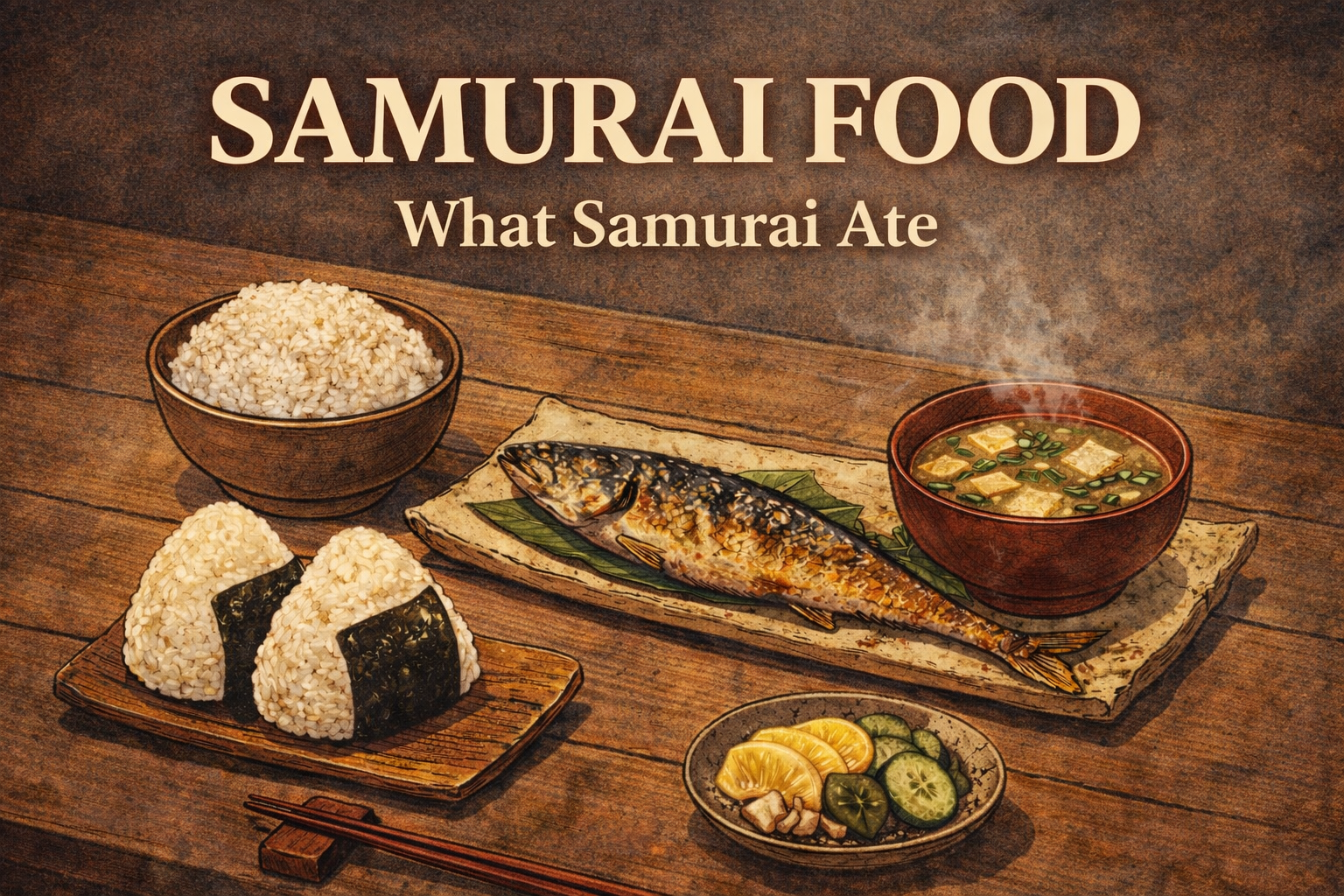
A typical samurai meal often included the following:
- Rice
- Miso soup
- Fish
- Vegetables
- Pickled foods
This is quite close to the style of traditional Japanese meals still seen today. Rather than rich or extravagant food, samurai usually ate meals that were practical, nourishing, and suitable for maintaining physical condition.
Miso was especially important because it could be used in soup and preserved foods. Fish was a major source of protein, while vegetables and pickles added variety and nutrition. From a modern point of view, this diet looks very healthy and balanced.
How Samurai Food Differed by Rank
Not all samurai lived in the same way. Samurai society had clear differences in rank, wealth, and responsibility, and these differences were reflected in food as well.
Meals of Daimyo and High-Ranking Samurai
Daimyo and high-ranking samurai had access to a wider range of food. Their meals could include better-quality rice, more fish, seasonal vegetables, and more elaborate dishes served during banquets or official occasions.
However, even wealthy samurai did not usually eat in a way that would seem extravagant by modern standards. Their food still followed the basic patterns of Japanese cuisine and seasonal eating.
Meals of Ordinary Samurai
Many lower-ranking samurai lived much more modestly. Especially during the Edo period, when peace reduced the military role of samurai, many of them worked in administrative positions but lived on limited income.
Their meals were often simple and repetitive, based on rice, miso soup, vegetables, and pickles. Fish might appear regularly, but food was still generally plain rather than luxurious.
This difference in diet is important because it shows that samurai were not all wealthy elites. In reality, many of them lived disciplined and modest lives.
Did Samurai Eat Meat?
One question that often surprises international readers is whether samurai ate meat.
In the periods when samurai lived, meat was not a major part of the Japanese diet. For long stretches of Japanese history, the influence of Buddhism discouraged the eating of certain animals such as cattle and horses.
As a result, samurai—like most people in Japan—usually got protein from fish, beans, and soybean products rather than red meat.
This does not mean meat was completely unknown. In some places and times, wild game was eaten. But it was not the center of daily meals, and it was far less common than in many modern diets.
That is one reason samurai food often appears surprisingly light and simple to modern readers.
Battlefield Food and Samurai Rations
Food on the battlefield was very different from food at home. During the Sengoku period, samurai and soldiers needed food that could be carried easily, stored for long periods, and eaten quickly.
Because of that, samurai rations were built around simple and durable ingredients.
Common battlefield foods included:
- Dried rice
- Miso
- Dried fish
- Pickled plums
- Rice balls
These foods were practical rather than luxurious. On campaign, the priority was portability, preservation, and energy.
Onigiri: The Samurai Rice Ball
One of the most recognizable examples of samurai food is onigiri, or Japanese rice balls.
Today, onigiri is a common Japanese snack or convenience food, but its basic form also made it ideal as battlefield food. Rice balls were easy to carry, simple to eat by hand, and useful during travel or military movement.
In many cases, onigiri included umeboshi, or pickled plum, which helped with preservation and was believed to support stamina and recovery.
For this reason, onigiri is one of the easiest ways for modern readers to imagine what samurai food may have looked like in practice.
Samurai Rations and Military Practicality
Samurai food in wartime was not about enjoyment. It was about efficiency. Food needed to travel well, last long enough, and support men during long campaigns.
This practical side of samurai meals reveals an important truth: samurai food was closely connected to mobility, discipline, and military life.
What Samurai Food Reveals About Samurai Values
Samurai food was not only about nutrition. It also reflected samurai values.
In samurai culture, discipline, moderation, and self-control were highly respected. This meant that food was often expected to support the body without encouraging excessive luxury.
Simple meals matched the ideals of restraint and readiness. Even when food quality differed by rank, the broader pattern remained practical rather than indulgent.
In that sense, samurai food offers more than a look at historical meals. It also provides insight into the mindset of the warrior class.
The Legacy of Samurai Food in Japanese Culture
Many elements of samurai food still feel familiar in Japan today.
Rice, miso soup, grilled fish, vegetables, pickles, and rice balls remain central to Japanese food culture. Of course, modern Japanese cuisine is far more diverse, but the traditional structure of meals still reflects older habits formed long before the modern era.
This is one reason the topic of samurai food is so interesting. It connects military history, social class, daily life, and Japanese culinary tradition in one subject.
Conclusion
Samurai food in Japan was usually simple, practical, and balanced. Rice formed the center of the diet, supported by miso, fish, vegetables, and pickled foods.
Meals differed by rank, with daimyo and high-ranking samurai enjoying more variety than ordinary samurai. At the same time, many samurai lived modestly, and their meals reflected that reality.
On the battlefield, food became even more practical. Rice balls, dried foods, miso, and pickled plums helped support samurai and soldiers during military campaigns.
Understanding what samurai ate helps us see the samurai not only as warriors, but also as people living within a disciplined social system. Their food tells us about daily life, military needs, and the values that shaped samurai culture in Japan.