
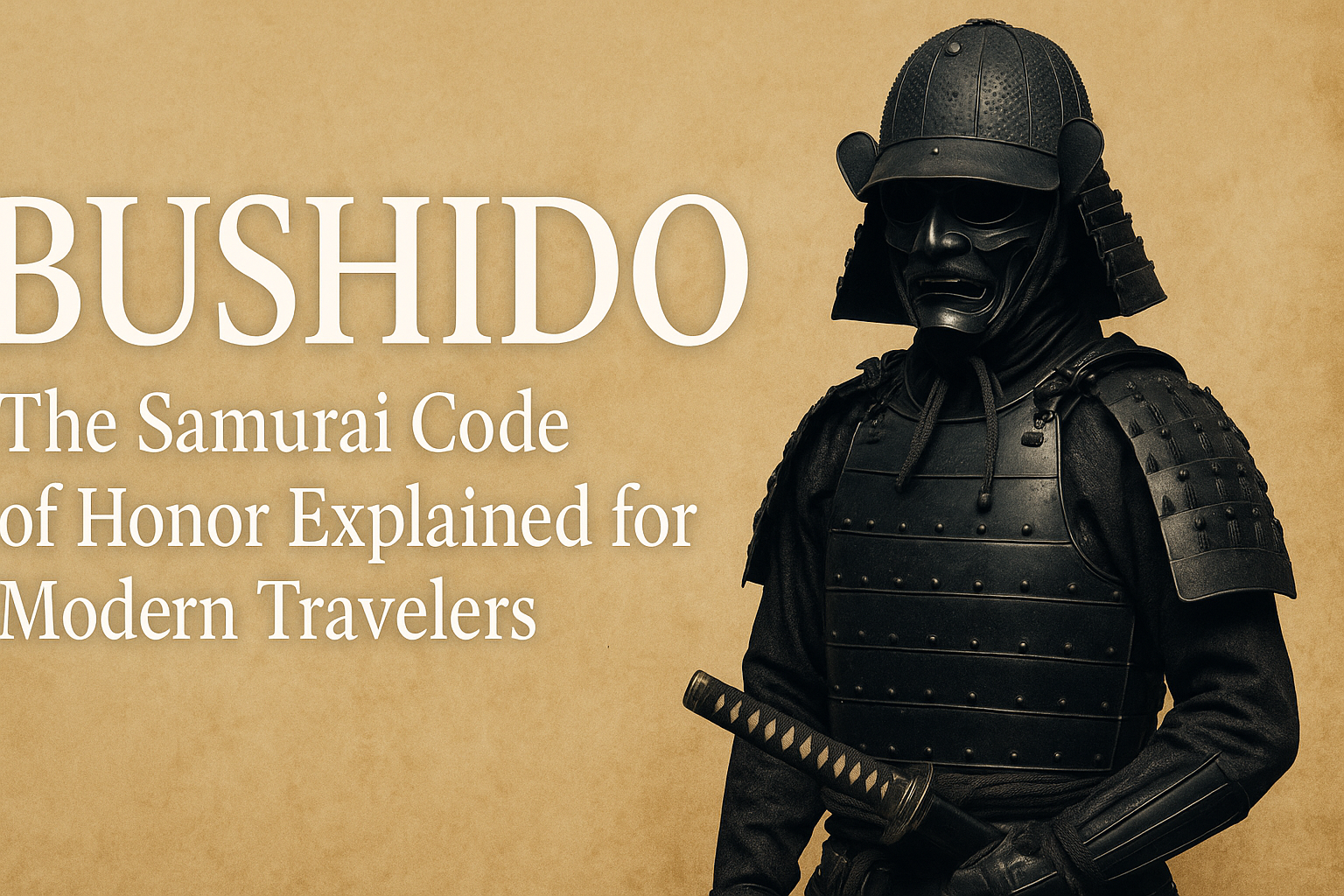
Among the many aspects of Japanese culture that fascinate visitors, the way of the samurai stands out as one of the most iconic. While movies and anime have spread the image of the samurai as noble warriors, the deeper philosophy behind their actions is rooted in Bushido—the Samurai Code of Honor. More than a historical concept, Bushido continues to influence Japanese society, business, and even modern tourism. This article will explore the history, values, and relevance of Bushido, and how travelers can experience it in Japan today.
What Is Bushido?
The Origins of the Term
The word Bushido (武士道) literally means “the way of the warrior.” It emerged during Japan’s Edo period as a moral and ethical system for the samurai class. Influenced by Confucianism, Buddhism, and Shinto, Bushido defined the proper conduct of a warrior in both peace and battle. The concept later spread to the West through Inazo Nitobe’s classic book Bushido: The Soul of Japan, published in 1900, which introduced the philosophy to global audiences.
The Core Virtues of Bushido
Bushido is often summarized through a set of seven key virtues:
- Gi (Righteousness): Justice and fairness
- Yū (Courage): Bravery in the face of fear
- Jin (Compassion): Kindness toward others
- Rei (Respect): Courtesy and politeness
- Makoto (Honesty): Sincerity and truthfulness
- Meiyo (Honor): Protecting one’s dignity and reputation
- Chūgi (Loyalty): Devotion to one’s lord and comrades
These principles were not abstract ideals; they served as practical guidelines for daily life and behavior among the samurai.
Bushido Through Japanese History
During the Warring States Period
In the Sengoku era (15th–16th centuries), loyalty and sacrifice were central to Bushido. Samurai pledged their lives to their lords, believing that dying for one’s master was the highest honor. This mindset shaped both political alliances and personal conduct in everyday life.
In the Edo Period
With the arrival of peace under the Tokugawa shogunate, Bushido transformed. Samurai rarely fought in real battles, but the philosophy evolved into a spiritual code that emphasized discipline, education, and the arts. Practices such as tea ceremony, calligraphy, and martial arts became vehicles for embodying Bushido’s principles.
The Spirit of Bushido in Modern Japan
In Japanese Business Culture
Bushido still influences Japan’s corporate world today. Concepts such as integrity, loyalty, teamwork, and customer-first service reflect the samurai spirit in a modern context. For international business travelers, understanding Bushido can provide valuable insight into Japanese work culture and negotiation styles.
In Everyday Life
The discipline of orderly train lines, the high rate of returned lost items, and the emphasis on politeness in customer service all reflect the lingering influence of Bushido’s virtues—honesty, respect, and responsibility—in modern society.
How Travelers Can Experience Bushido
Museums and Historical Sites
- Tokyo National Museum (Ueno): Home to samurai armor, swords, and artifacts that reveal the warrior’s mindset.
- Yasukuni Shrine & Yūshūkan Museum: Exhibits highlighting Japan’s martial history and values of loyalty and honor.
- Aizu-Wakamatsu (Fukushima): Known for the story of the Byakkotai, young warriors whose tragic loyalty became a symbol of Bushido.
Hands-On Samurai Experiences
One of the most engaging ways to understand Bushido is to practice the samurai way yourself. In Harajuku, Tokyo, visitors can join the SAMURAI EXPERIENCE, where you learn sword techniques, etiquette, and posture directly inspired by the samurai tradition. This is not just a performance—it’s a rare chance to embody the values of Bushido through action.
Why Bushido Matters for Modern Travelers
Learning about Bushido gives visitors a cultural lens through which to experience Japan more deeply. Whether visiting temples in Kyoto or taking part in samurai training in Tokyo, understanding the Samurai Code of Honor enriches every aspect of the journey.
Conclusion: Lessons from Bushido Today
Bushido is not simply a relic of the past. Its virtues—justice, honesty, compassion, honor, and loyalty—remain highly relevant for modern life. Travelers who explore Japan with an awareness of Bushido will gain not only historical knowledge but also timeless lessons in character and discipline.
👉 Ready to experience the way of the samurai? Book your authentic Samurai Experience in Harajuku, Tokyo today.