Explore how samurai created castle towns, structured their social space, and discover the best preserved samurai-era cities you can visit today.
1. What is a Samurai Castle Town?
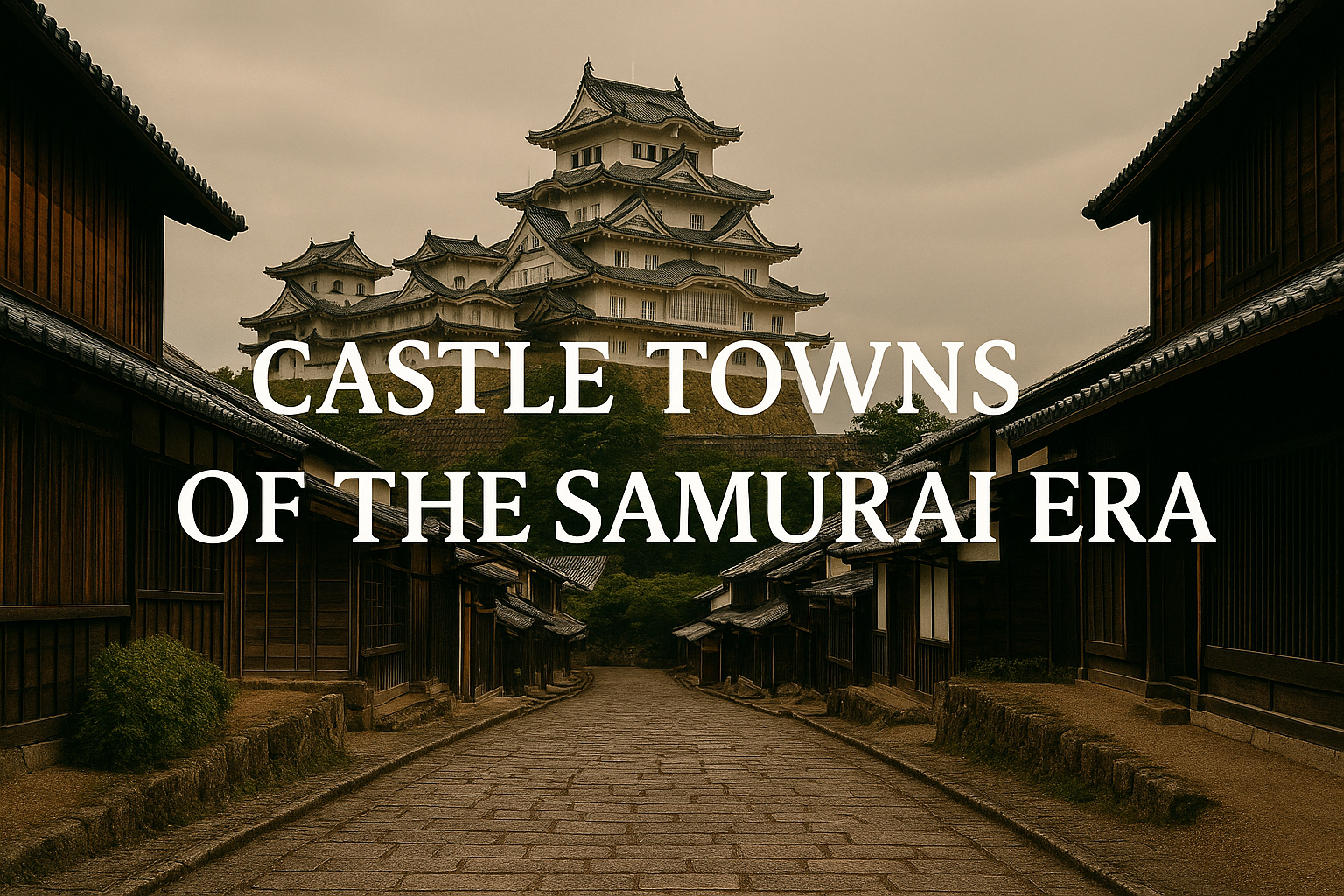
In feudal Japan, castles were not just military fortresses — they were the centers of politics, culture and urban life. A “castle town” was built around the lord’s castle and served as a comprehensive administrative and military hub. Samurai residences, merchant districts, craft areas and temples all arose in concentric patterns around the stronghold.
1-1. The Urban Layout of Power
Samurai were allotted plots called “buke-yashiki” (武家屋敷) near the castle, while merchants lived farther out. Roadways were designed with defense in mind, often winding or lined with earthen walls and canals to slow any enemy advance.
2. Samurai Housing & Urban Life
2-1. Samurai Residences
The residences of samurai were simple yet clearly structured: a gate, longhouse for retainers, main house, treasury, and garden. The layout and position of each home within the town reflected the samurai’s rank and his proximity to the lord.
2-2. Merchant vs. Warrior Districts
In a castle town, you will often clearly distinguish the samurai quarters from the merchant and artisan zones. This spatial separation reinforced the hierarchy of feudal society and still shapes the historic districts of cities such as Kanazawa and Matsumoto.
3. The Castle as Hub of Governance
Beyond defence, the castle served as the heart of administration: governmental offices, financial vaults, and living quarters all evolved around it. The grandeur and layout of the castle were symbolic of the samurai’s power and authority.
3-1. Castle Town Governance
Warriors held official posts — such as town magistrate (machibugyō) and construction overseer (fushin bugyō) — which meant the castle town functioned as a full administrative city. This system is the direct ancestor of Japan’s modern municipal governance.
4. Top Castle Towns You Can Visit Today
4-1. Kanazawa, Ishikawa Prefecture
Known as “the city of a million koku”, Kanazawa retains one of Japan’s most complete samurai quarters and historic districts. Visit Kanazawa – Official English Travel Guide :contentReference[oaicite:2]{index=2}
4-2. Matsumoto, Nagano Prefecture
Centered around the national treasure Matsumoto Castle, Matsumoto offers a well-preserved castle town atmosphere surrounded by the Japanese Alps. Visit Matsumoto – Official English Travel Guide :contentReference[oaicite:4]{index=4}
4-3. Other Noteworthy Locations
From the well-preserved samurai district in Nagamachi, Kanazawa Nagamachi Samurai District – Japan National Tourism Organization :contentReference[oaicite:5]{index=5} to the castle town layout still visible in Matsumoto’s old town streets, these sites provide a direct link to Japan’s warrior past.
5. Why Learn About Samurai Towns?
Understanding the structure of a castle town offers more than just historical insight. You’ll discover how modern Japanese cities were shaped by warrior-class values of order, loyalty and community. Walking these cities becomes a way to step back into a society where governance, identity and place were inseparable.