In the Edo period, samurai governed their domains from castles and the castle towns surrounding them. These urban centers were not only military bases but also administrative hubs, economic centers, and symbols of political authority.
In our companion article, “Castle Towns of the Samurai Era – Urban Life of the Warrior Class,” we explained how samurai hierarchy shaped the physical layout of castle towns. In this guide, we turn theory into practical travel recommendations by introducing real samurai castles and castle towns you can visit today.
This article is divided into two parts:
• Castles you can visit easily from Tokyo (day trips & overnight trips)
• Japan’s most iconic samurai castles nationwide (famous destinations worth visiting if you travel beyond Tokyo)
A. Samurai Castles & Castle Towns You Can Visit from Tokyo
These destinations are realistic for travelers staying in Tokyo. All listed castles and sites are open to the public, though accessibility varies depending on season and facility type.
1. Kawagoe Castle & “Little Edo” (Saitama)
Kawagoe Castle served as an important satellite of Edo, functioning as the shogunate’s northern defensive outpost. The existing Honmaru Palace (Honmaru Goten) is one of the few surviving castle palace buildings in Japan.
Tourist Accessibility:
* The Honmaru Palace is open to the public.
* The preserved samurai residence (former Yamazaki House) is also open.
* The castle town area—including warehouse-style merchant streets—is fully walkable.
High-ranking samurai residences once stood near the castle, while mid-ranking retainers lived further out in organized rows. Today, the layout of these districts allows visitors to visually understand the social hierarchy described in the companion article.
2. Odawara Castle (Kanagawa)
Originally the stronghold of the Hojo clan, Odawara Castle later became an important Edo-period administrative and military site. The vast defensive network known as sogamae once enclosed the entire town.
Tourist Accessibility:
* The reconstructed main keep is open for interior viewing.
* Major defensive gates (Tokiwagi Gate, Akagane Gate) are fully accessible.
* The castle park is open year-round.
Odawara Castle is one of the most complete “big castle experiences” near Tokyo, making it ideal for travelers wanting to explore large keeps, gates, moats, and lookout points in a single visit.
3. Sakura Castle & Samurai Residences (Chiba)
Sakura Castle was built primarily with earthen ramparts and dry moats, showing a different style of Edo-period military engineering compared to stone-built castles in western Japan.
Tourist Accessibility:
* The castle ruins (moats, earthen walls) are open 24 hours as a public park.
* Two authentic samurai residences are open to the public.
* The National Museum of Japanese History is adjacent to the castle grounds.
Sakura is one of the best places in eastern Japan to see how samurai of different ranks lived. The preserved houses offer a rare window into daily life—including room structure, garden layout, and social protocols.
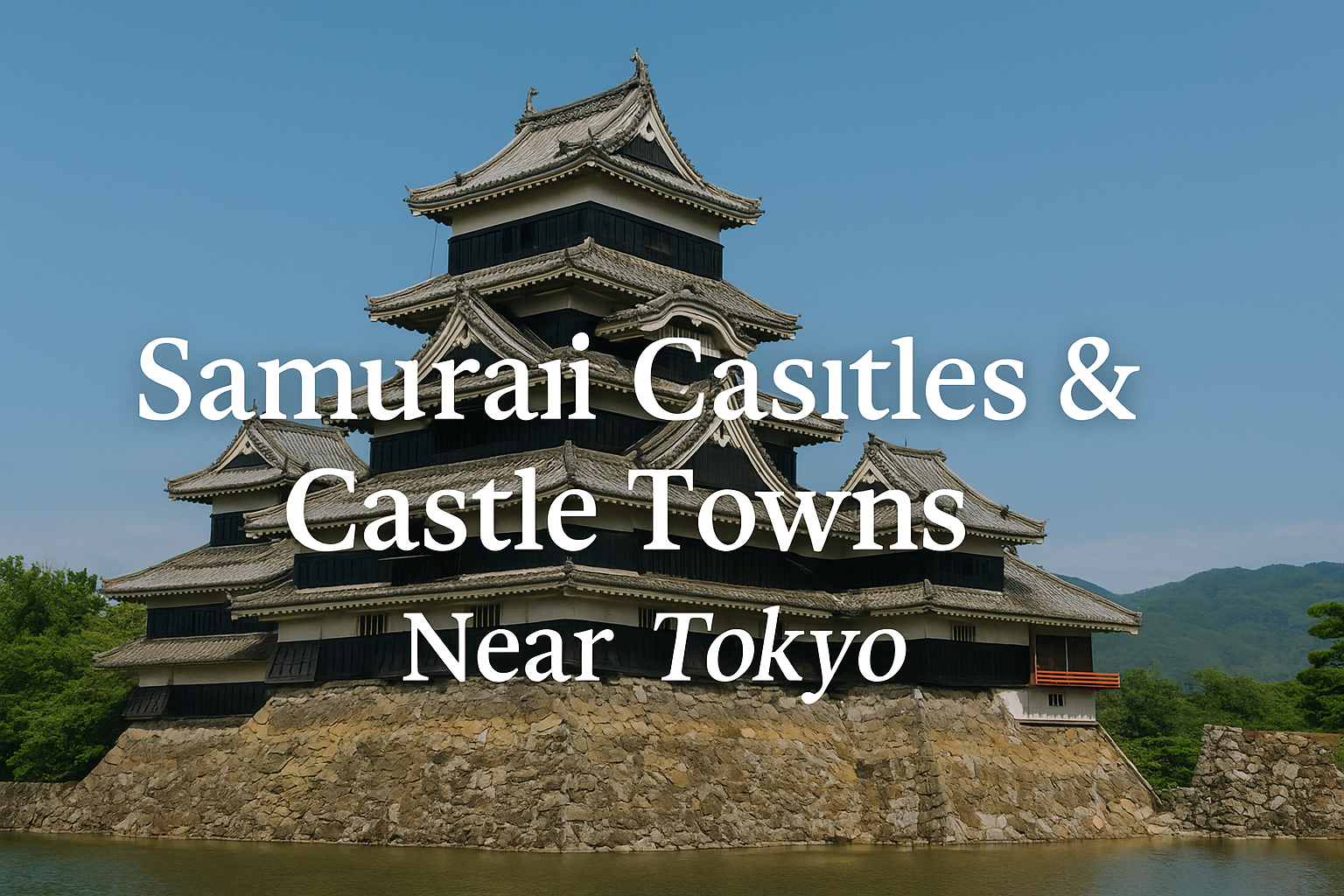
4. Matsumoto Castle (Nagano) – National Treasure
Matsumoto Castle, known as the Black Castle, is one of Japan’s best-preserved original keeps. The steep stairs, musket loopholes, arrow slits, and stone-drop openings inside the tower provide an authentic sense of samurai defensive strategy.
Tourist Accessibility:
* The main keep (National Treasure) is open for interior tours.
* The surrounding castle town is fully walkable and well-preserved.
* Exhibits inside the keep explain weapons, armor, and military functions.
The town structure—samurai districts near the inner moat and merchant quarters further out—remains visible in modern street layouts.
5. Ueda Castle (Nagano) – The Stronghold of the Sanada Clan
Ueda Castle is famous for the Sanada clan’s ingenious defensive tactics that successfully resisted Tokugawa forces twice. Though the main keep no longer exists, several gates and turrets remain.
Tourist Accessibility:
* The castle remains and turrets are open to the public.
* The castle park is accessible year-round.
* Seasonal events such as cherry blossom festivals enhance the experience.
Visitors can easily imagine how samurai defenders used the river, cliffs, and narrow approaches to outmaneuver larger armies.
B. Japan’s Iconic Samurai Castles (Beyond the Tokyo Region)
These castles are essential for anyone serious about samurai history. Although not near Tokyo, they represent the pinnacle of military engineering, aesthetics, and feudal administration.
6. Osaka Castle (Osaka)
Built by Toyotomi Hideyoshi, Osaka Castle symbolized the unification of Japan. Its enormous stone walls and moats reflect Hideyoshi’s political ambition and military power.
Tourist Accessibility:
* The main keep (a modern reconstruction) is fully open as a museum.
* The castle park is accessible year-round.
* Surrounding stone walls and baileys remain extensive and intact.
Osaka developed into a major economic hub in the Edo period, blending samurai administration with merchant activity—offering a unique perspective on samurai-era urban life.
7. Nagoya Castle (Aichi)
Nagoya Castle served as the seat of the Owari branch of the Tokugawa clan. Its iconic golden shachihoko symbolize the wealth and authority of the Tokugawa family.
Tourist Accessibility:
* Main keep interior is currently closed due to seismic concerns.
* The exterior, castle grounds, gates, and walls are fully accessible.
* The restored Honmaru Palace is open and highly recommended.
Even without interior access to the keep, Nagoya Castle remains one of Japan’s most important samurai sites thanks to its urban planning, palace architecture, and historical significance.
8. Himeji Castle (Hyogo) – UNESCO World Heritage
Himeji Castle is widely regarded as the finest surviving example of Japanese castle architecture. The white plaster walls and elegant form conceal a highly sophisticated defensive system.
Tourist Accessibility:
* The original main keep is fully open for interior tours.
* Most baileys, gates, and defensive corridors are walkable.
* The surrounding castle town layout is still evident today.
Himeji’s interior paths reveal the psychological warfare behind its design—maze-like routes, hidden firing angles, surprise enclosures, and elevation changes meant to exhaust invaders.
9. Kumamoto Castle (Kumamoto)
Kumamoto Castle, built by Kato Kiyomasa, is known for its massive musha-gaeshi stone walls that curve steeply upward, making them extremely difficult to scale.
Tourist Accessibility:
* The main keep area is open via a designated visitor route.
* Ongoing restoration continues after the 2016 earthquake.
* Some internal areas remain restricted, but major structures are viewable.
Even in its partially restored state, Kumamoto Castle is one of the best places to understand the realities of siege warfare in the samurai era.
10. Hirosaki Castle (Aomori)
Hirosaki Castle is the only original Edo-period main keep remaining in the Tohoku region and was the seat of the Tsugaru clan. The complex includes multiple baileys, moats, and surviving gates.
Tourist Accessibility:
* The castle park is open year-round.
* The main keep interior is open seasonally (generally spring–autumn).
* Winter illumination and snow lantern events transform the site into a unique landscape.
Hirosaki is also one of Japan’s top cherry blossom destinations, with around 2,600 trees—many of which originated from saplings planted by samurai in the Edo period. Seasonal festivals (Cherry Blossom Festival, Neputa Festival, Snow Lantern Festival) make it a living intersection of samurai culture and northern climate traditions.
How to Use This Guide
For visitors staying in Tokyo, begin with the castle towns in Section A. These destinations offer an ideal introduction to how samurai shaped urban life.
For deeper historical exploration, consider adding one or more castles from Section B, each representing a different dimension of samurai history: political authority, defensive engineering, cultural magnificence, or adaptation to harsh climates.
We also recommend pairing this guide with the companion article “Castle Towns of the Samurai Era – Urban Life of the Warrior Class” for a complete understanding of how samurai social hierarchy translated into real-world urban design.