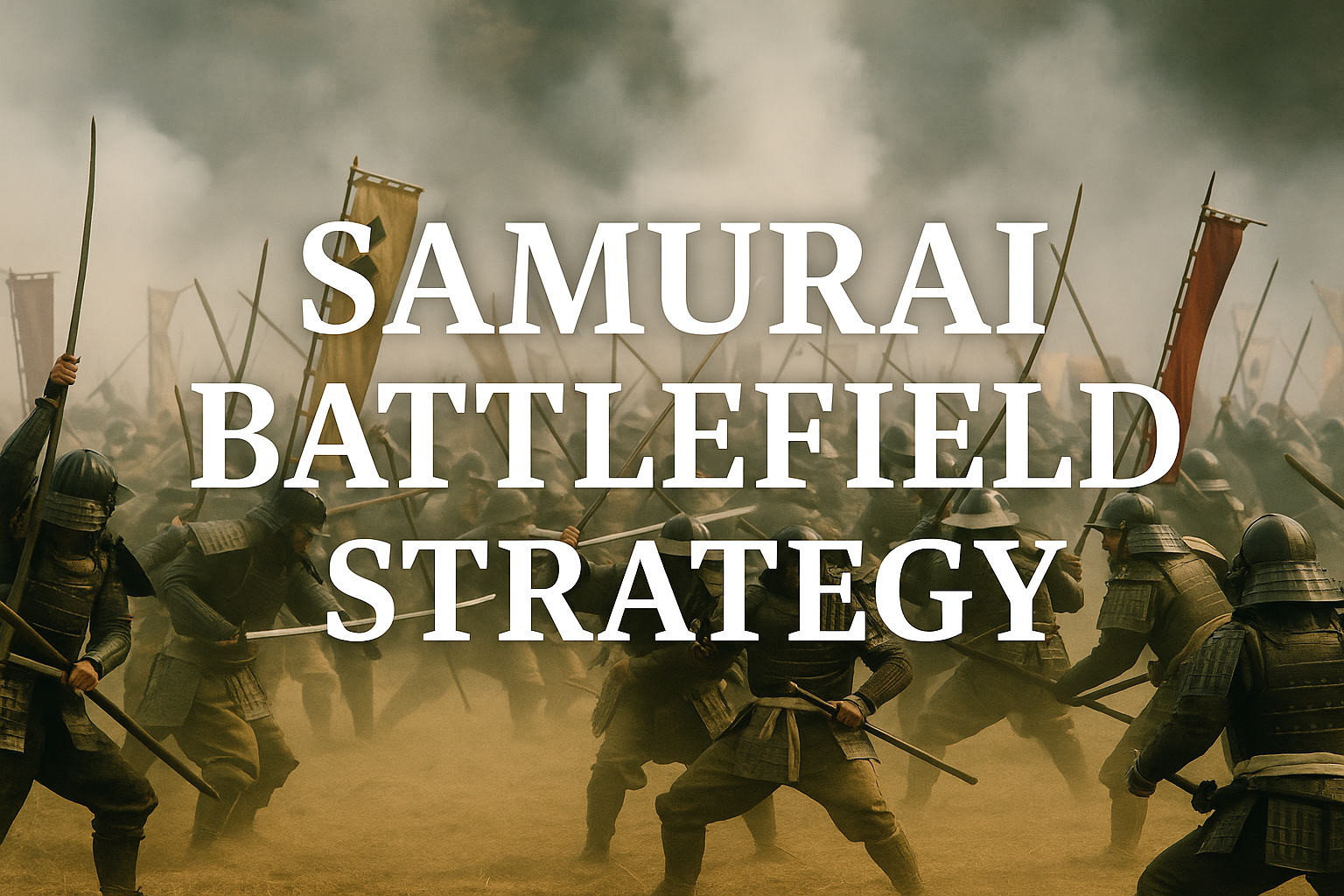
When people imagine samurai, they often picture one-on-one sword duels. In reality, historical battles involving samurai were usually fought as highly organized group engagements. Samurai fought as part of structured armies built around spears, bows, and later matchlock guns, with clear chains of command and carefully planned formations. Understanding this organized side of samurai warfare reveals a much more complex and strategic picture than the image of lone warriors clashing with swords.
- Table of Contents
- 1. From Duels to Organized Warfare
- 2. Main Weapons on the Samurai Battlefield
- 3. The Flow of Battle: From First Shot to Final Charge
- 4. Army Organization and Chain of Command
- 5. Terrain and Fortifications as Strategy
- 6. Logistics, Morale, and the End of Battle
- 7. What We Can Learn from Samurai Strategy Today
- 8. Experiencing Samurai Tactics in Modern Japan
- 9. Conclusion: Samurai Warfare as a System
Table of Contents
- 1. From Duels to Organized Warfare
- 2. Main Weapons on the Samurai Battlefield
- 3. The Flow of Battle: From First Shot to Final Charge
- 4. Army Organization and Chain of Command
- 5. Terrain and Fortifications as Strategy
- 6. Logistics, Morale, and the End of Battle
- 7. What We Can Learn from Samurai Strategy Today
- 8. Experiencing Samurai Tactics in Modern Japan
- 9. Conclusion: Samurai Warfare as a System
1. From Duels to Organized Warfare
In the popular imagination, samurai are often portrayed in formal duels. Early medieval warfare in Japan did feature elements of individual combat and name-calling across the battlefield, but over time this changed dramatically. By the late medieval and Sengoku (“Warring States”) period, warfare had become highly organized. Large armies fought as coordinated units, not as collections of individual champions.
Samurai fought alongside large numbers of foot soldiers (ashigaru), spear units, archers, and later gunnery units. Commanders needed to think not only about personal bravery but also about formations, timing, logistics, and communication. In this sense, samurai warfare began to resemble other forms of early modern warfare around the world, where discipline and organization mattered as much as individual skill.
2. Main Weapons on the Samurai Battlefield
Although the sword is the symbol of the samurai, it was not the main weapon used in large-scale battles. The true workhorses of the battlefield were:
- Spears (yari)
- Bows (yumi)
- Matchlock guns (tanegashima / hinawajū)
Each of these weapons played a specific role within the larger strategy of the army.
2.1 Swords vs. Battlefield Reality
The sword was indeed important as a status symbol and as a sidearm in close combat. However, on large battlefields:
- Swords were often a secondary weapon, drawn when a spear broke or when the fighting became too close for longer weapons.
- Most casualties in major battles likely resulted from spears, arrows, and bullets rather than from sword duels.
To understand samurai warfare, it is more accurate to begin with the spear, bow, and gun—then see where the sword fits into that larger picture.
2.2 Spears: The Backbone of Samurai Armies
The yari became the central weapon of battlefield combat. Spears used in war could be several meters long. When many troops held them together in formation, they formed a moving wall of sharp points.
Why spears became so important:
- Reach and control: The long shaft allowed samurai and ashigaru to strike from a distance and keep enemies at bay.
- Formation strength: A line or block of spearmen was difficult to break, especially when well-trained and tightly organized.
- Flexible tactics: Spears could be used offensively (pushing forward) or defensively (forming a defensive hedge of spear points).
In many battles of the Sengoku period, the decisive phase consisted of large spear formations pressing against one another, trying to break the opposing line.
2.3 Bows: Controlling Space and Timing
Long before firearms arrived, the Japanese longbow (yumi) played a central role in warfare. It was used both by mounted samurai and by foot archers.
The bow’s main battlefield roles included:
- Softening enemy lines before spear units engaged.
- Targeting officers and banners to disrupt command.
- Creating psychological pressure through volleys of arrows.
Well-timed volleys could disorder enemy formations, making them more vulnerable to a spear advance or cavalry attack.
2.4 Matchlock Guns: A New Layer of Firepower
Firearms were introduced to Japan in the 16th century and spread rapidly. Matchlock guns, often called tanegashima after the island where they first arrived, added a new dimension to samurai tactics.
The matchlock’s advantages included:
- Strong stopping power at medium range.
- Relatively quick training compared to mastering the bow.
- Effective massed fire when organized in disciplined units.
Gun units were often placed behind palisades or simple wooden fences, using cover to maximize their effectiveness while minimizing exposure to enemy fire and charges.
3. The Flow of Battle: From First Shot to Final Charge
Samurai battles were not random clashes. They followed a recognizable flow shaped by planning, reconnaissance, and the coordinated use of different weapon types.
3.1 Reconnaissance and Planning
Long before the first arrow was loosed or the first gun was fired, commanders relied on scouts and local knowledge. They needed to understand:
- The shape of the terrain—hills, rivers, forests, and narrow passes.
- Enemy numbers, formations, and possible reinforcements.
- Roads and supply routes crucial for movement and logistics.
This information allowed them to choose strong positions, plan ambushes, or decide when to avoid battle altogether.
3.2 Opening Exchanges: Arrows and Bullets
When battle began in earnest, it usually started with ranged attacks. Archers and gunners attempted to:
- Thin out enemy ranks.
- Disrupt formations.
- Test the enemy’s reaction and reveal their strength.
Commanders might adjust their plans based on how the enemy responded to these initial exchanges. For example, if the enemy advanced too quickly under fire, they could be drawn into traps or unfavorable ground.
3.3 The Clash of Spear Formations
The most intense phase of many battles came when spear formations finally collided. Two walls of spear points pressed against each other, with soldiers trying to push the enemy line back, create gaps, or topple opponents.
Key elements in this phase included:
- Discipline: If a spear line broke formation, it became vulnerable.
- Support from behind: Reserve units could reinforce weak points.
- Coordination with ranged units: Archers or gunners could target exposed flanks.
In this moment, individual courage mattered—but it was multiplied or wasted depending on how well the larger formation held together.
3.4 Cavalry Breakthroughs and Pursuit
If one side managed to break the enemy’s line, the battle could quickly shift in its favor. This is when cavalry units often played a decisive role. Mounted samurai could:
- Charge through gaps in the enemy formation.
- Target enemy commanders or standard-bearers.
- Chase retreating soldiers and turn a withdrawal into a rout.
Because of their speed, cavalry units were a powerful tool for exploiting opportunities created by spear units and gunnery.
3.5 Ambushes, Night Attacks, and Deception
Not all battles were straightforward frontal clashes. Commanders also made use of:
- Ambushes from forests or hillsides.
- Feigned retreats to lure enemies into traps.
- Night attacks to strike when visibility was poor.
- Fire attacks on camps, supply depots, or fortifications.
These tactics required careful coordination, knowledge of terrain, and a keen understanding of how enemies were likely to react.
4. Army Organization and Chain of Command
The structure of samurai armies reflected the broader hierarchy of samurai society. Authority flowed downward from the overall commander through multiple layers of retainers.
4.1 Basic Structure of a Samurai Army
- Overall commander (daimyo or leading general) – sets strategy and overall objectives.
- Senior retainers and division commanders – control large segments of the army.
- Unit leaders – command spear units, archers, gunners, and support troops.
- Ashigaru and lower-ranking samurai – form the bulk of the fighting force.
Orders needed to be clear and timely. Flags, drums, conch shells, and messengers were commonly used as communication tools on the battlefield.
4.2 Roles Defined by Rank
Rank was closely tied to battlefield roles:
- High-ranking samurai typically stayed near the command post, making decisions and directing reserves.
- Middle-ranking samurai often led units of spearmen, archers, or gunners.
- Lower-ranking samurai and ashigaru formed the front lines in spear or firearm units.
This hierarchy allowed large armies to move with some degree of coordination, even in the chaos of battle.
5. Terrain and Fortifications as Strategy
In samurai warfare, choosing where to fight was often as important as deciding how to fight. Commanders exploited terrain and fortifications to tilt the odds in their favor.
5.1 Using Terrain to Shape the Battle
Common considerations included:
- Hills and ridges for better visibility and defensive advantage.
- Rivers and marshes to slow or channel enemy movement.
- Forests for concealment and ambushes.
- Narrow passes where smaller forces could hold off larger ones.
A well-chosen position could make a smaller or less experienced army much more effective.
5.2 Castles, Palisades, and Field Fortifications
Warfare in Japan was closely connected to castles and fortified positions. Apart from large stone castles, armies also used:
- Earthworks and ditches to control movement.
- Wooden fences and palisades to shield gunners and archers.
- Simple field fortifications built on hills or ridgelines.
These structures could significantly increase the effectiveness of ranged units and make direct assaults very costly for attackers.
6. Logistics, Morale, and the End of Battle
Battles did not exist in isolation. They depended on supply lines, camp management, and the ability to maintain morale over time.
6.1 Logistics and Supply
An army needed food, water, arrows, gunpowder, and spare equipment. If supplies ran short, even a strong army could be forced to retreat or surrender.
Logistical concerns influenced:
- How long a siege could be maintained.
- Whether an army could afford to pursue a retreating enemy.
- Where camps were located and how they were defended.
6.2 The End of Battle and Aftermath
When one side broke and fled, organized pursuit could turn defeat into disaster. At the same time, winning commanders needed to maintain discipline to prevent uncontrolled looting or friendly casualties.
After battle, reports were made, rewards distributed, and the performance of retainers carefully evaluated. Victories and failures influenced future promotions, alliances, and even the fate of entire families.
7. What We Can Learn from Samurai Strategy Today
Samurai battlefield strategy can feel distant from modern life, but many underlying principles remain relevant:
- Organization over individual brilliance – success depends on how well people work together as a system.
- Preparation and information – scouting and planning before action greatly increase the chance of success.
- Right tools for the right role – spears, bows, and guns each had a distinct function, just like teams and tools in modern projects.
- Adaptation to terrain and context – great leaders adjust their tactics to the environment rather than forcing a single approach everywhere.
- Logistics and endurance – sustaining effort over time is often more decisive than a single dramatic moment.
Seen this way, samurai warfare offers practical lessons about leadership, coordination, and strategic thinking beyond the battlefield.
8. Experiencing Samurai Tactics in Modern Japan
Today, it is possible to experience elements of samurai movement and mindset through cultural activities and performance-based training. Stage combat styles known as tate recreate stylized samurai fighting with safe weapons, while still drawing on principles of timing, distance, and teamwork.
If you are visiting Tokyo and would like to explore samurai culture in a more hands-on way, you can join a samurai action lesson in Harajuku. At SAMURAI EXPERIENCE, instructors teach:
- Basic posture and footwork inspired by samurai movement.
- Safe sword handling with practice weapons.
- Choreographed tate-style sequences that feel like a scene from a samurai drama.
You can find detailed plans and booking information here: SAMURAI EXPERIENCE plans in Tokyo (Harajuku).
9. Conclusion: Samurai Warfare as a System
Samurai warfare was much more than clashing swords. It was a complex system built from:
- Spears forming the backbone of formations.
- Bows and guns shaping the early phases of battle.
- Cavalry exploiting breakthroughs.
- Carefully layered chains of command.
- Strategic use of terrain and fortifications.
- Logistics, morale, and disciplined retreat or pursuit.
By looking beyond the iconic image of the sword, we gain a clearer view of how samurai actually fought—and how much thought, planning, and organization went into every major battle. This broader perspective not only enriches our understanding of history but also offers insights into leadership and strategy that remain meaningful today.