
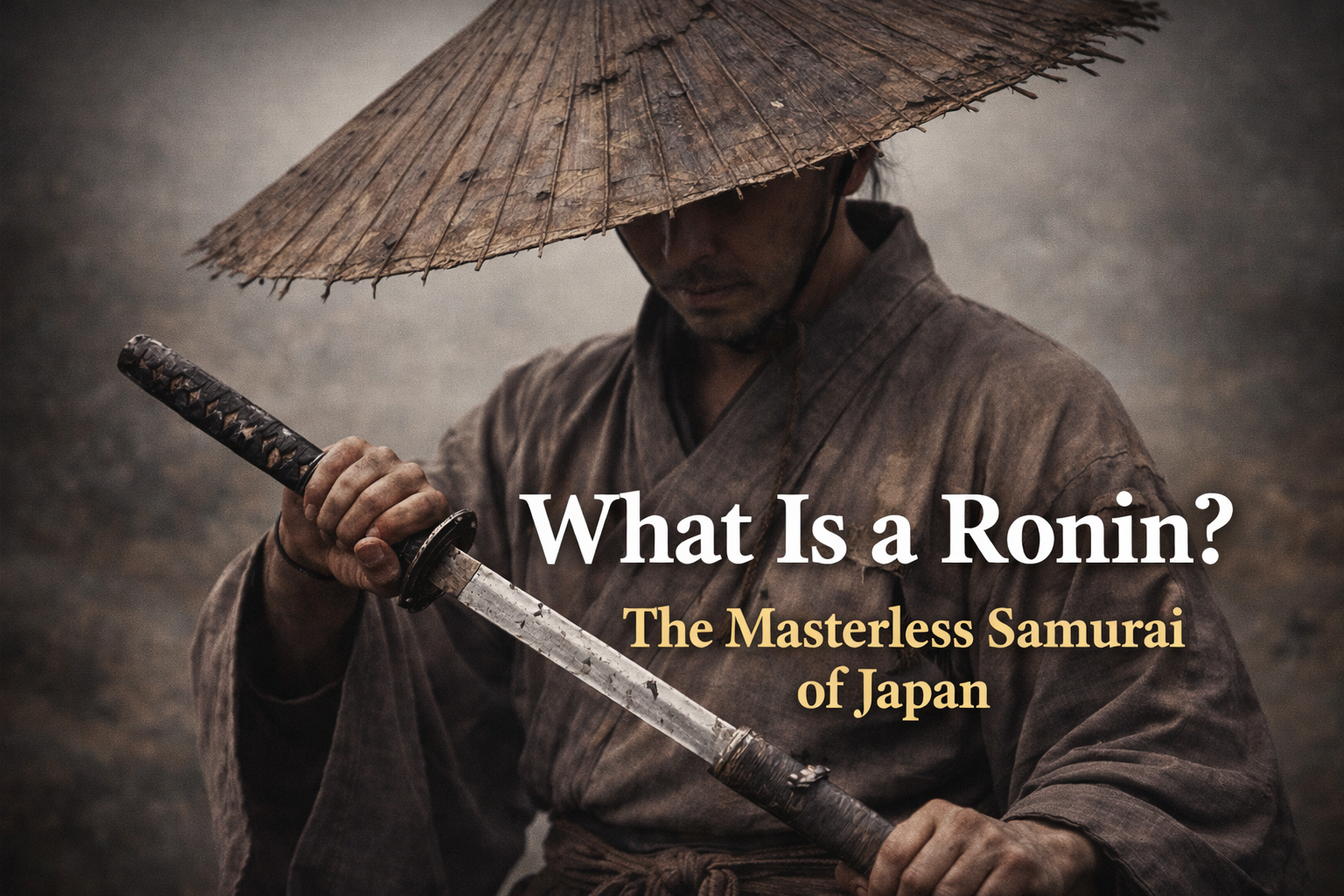
What Is a Ronin?
When people think of samurai, they usually imagine warriors serving a powerful lord. However, in Japanese history there was another type of samurai known as the ronin. A ronin was a samurai who had lost his master and no longer belonged to any clan.
The word ronin literally means “wave man,” referring to someone who drifts like a wave without a fixed place. In feudal Japan, samurai normally served a daimyo, or feudal lord, and received payment in rice or land. When a lord died, lost power, or dismissed his retainers, the samurai who served him could become ronin.
The term Ronin is used worldwide today without translation, and it often appears in movies, games, and novels. However, the real history of ronin was more complex and often more difficult than the romantic image seen in modern stories.
Samurai Were Meant to Serve a Lord
In the feudal system of Japan, samurai were expected to serve their lord with loyalty. In exchange for their service, they were given a salary, usually paid in rice, and a position in society. This relationship was not just a job but a bond of duty and honor.
Loyalty to one’s lord was one of the most important values in the samurai world. Losing a master meant losing both livelihood and identity. Because of this, becoming a ronin was often seen as a difficult and shameful situation.
During the Sengoku period, when wars were frequent and many clans were destroyed, large numbers of samurai became ronin. Each time a lord lost his land, his retainers were left without a place to serve.
The Reality of Life as a Ronin
Modern stories often show ronin as free warriors traveling the country, but real life was usually much harder. Without a lord, a ronin had no steady income. Many had to search for a new master, teach martial arts, work as bodyguards, or take other jobs to survive.
Some ronin became merchants or farmers, while others struggled to find any work at all. Because they were trained in combat but had no official position, they were sometimes feared by the government.
During the peaceful Edo period, the number of ronin increased because there were fewer wars and fewer opportunities for samurai to serve. As a result, ronin sometimes became a social problem, and the authorities kept a close watch on them.
Loyalty, Honor, and the Samurai Spirit
The story of ronin is closely connected to the values of loyalty and honor. For samurai, serving their lord faithfully was considered the highest duty. Losing a master could leave a warrior without purpose.
Some samurai chose to find a new lord, while others followed a different path. In some cases, samurai took their own lives after their lord’s death, believing that loyalty should continue even after the end of service.
One of the most famous stories in Japan is the tale of the Forty-Seven Ronin. In this story, a group of masterless samurai spent years planning revenge for their fallen lord. Their actions became a symbol of loyalty and honor, and the story is still widely known today.
Why Ronin Became More Common in the Edo Period
When Japan entered the Edo period, the country became peaceful under the rule of the Tokugawa shogunate. With fewer wars, there was less need for large numbers of samurai.
As a result, many warriors could not find positions with a lord and became ronin. Some former samurai were forced to live ordinary lives, even though they had been trained as warriors.
The government sometimes viewed ronin as dangerous because they had combat skills but no official loyalty. This led to strict rules and close supervision in certain periods.
Why the Ronin Is Popular Around the World
The idea of a masterless warrior has strong appeal in many cultures. A ronin is often seen as a lone fighter who follows his own sense of honor instead of serving a ruler.
This image is similar to the wandering knight in Europe or the lone gunman in Western films. Because of this, the concept of the ronin became popular in international movies, games, and novels.
Today, the word Ronin is widely recognized, and it represents independence, discipline, and personal code of honor. Even though the real history was often harsh, the story of the ronin continues to inspire people around the world.
Understanding Ronin Helps Us Understand Samurai
Not all samurai lived stable and honorable lives. Many faced uncertainty, especially when they lost the lord they served. The existence of ronin shows that the samurai world was not only about glory, but also about struggle and change.
By learning about ronin, we can better understand the structure of feudal Japan and the values that shaped the samurai. Loyalty, honor, duty, and survival were all part of their lives.
The history of the ronin reminds us that the samurai were not only warriors, but also people living in a strict and demanding society.